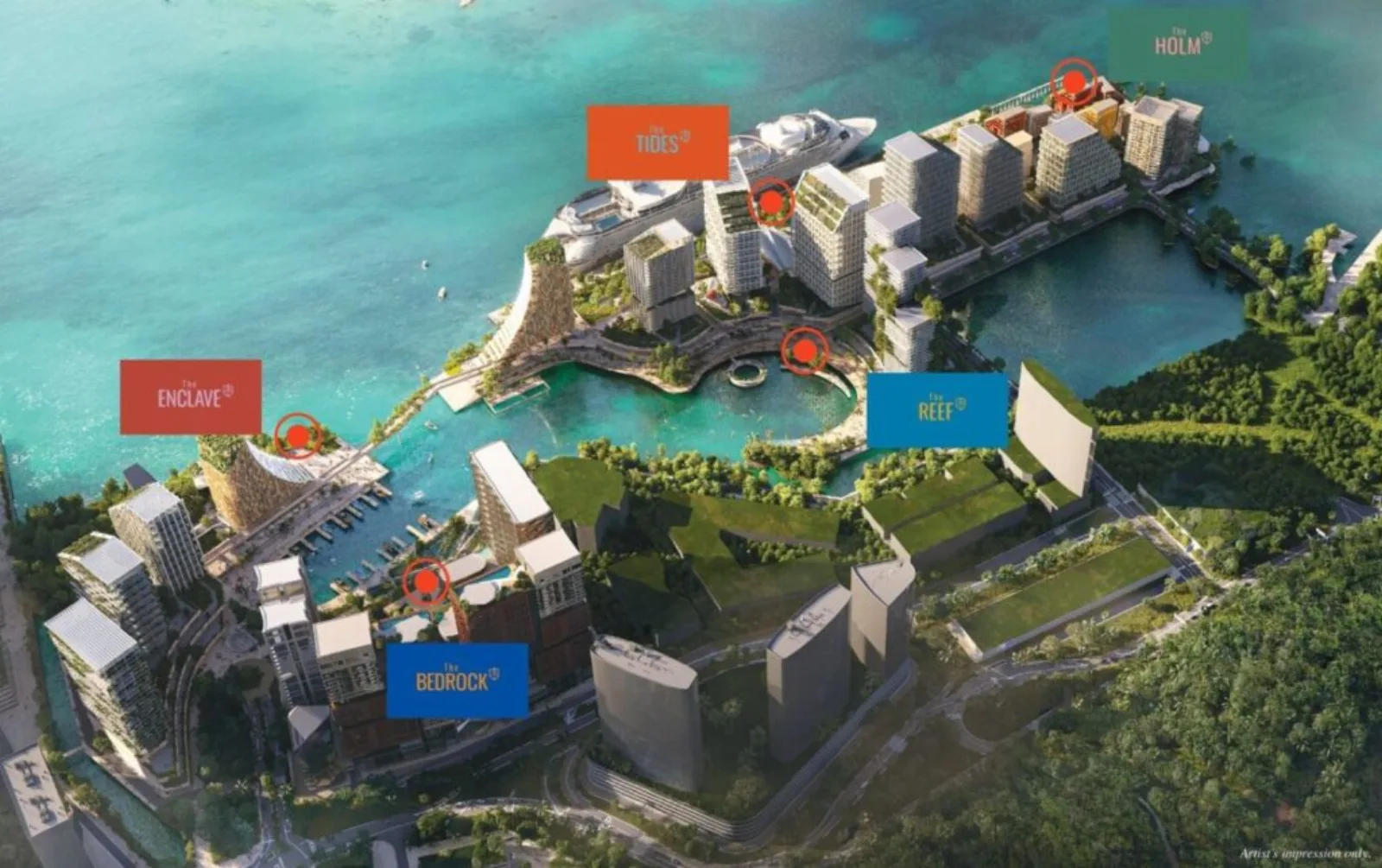
Until recently, Sabah barely registered on the radar of buyers comparing new launches across Malaysia — the state's property market ran almost entirely on local demand, with none of the branded, Klang Valley-style launches that dominate KL, Penang or Johor Bahru. That changed in late 2025, when EXSIM — the developer behind 16 current projects across the Klang Valley, Johor Bahru and Penang — broke ground on its first two Sabah developments within weeks of each other: The Bedrock in Kota Kinabalu and Sejati Sentral in Sandakan.
Both are genuinely different products in genuinely different cities, so this isn't a single "Sabah property" story — it's two.
Why developers are suddenly building in Sabah
Two separate forces are at work. In Kota Kinabalu, it's a landowner-led waterfront transformation: Suria Capital Holdings Bhd, the port operator that owns the land around Jesselton Point, is redeveloping a 75-acre stretch of the city's waterfront — Jesselton Waterfront City, a RM9.2 billion GDV masterplan that will eventually include a cruise terminal, an international school, a wellness centre, the Aquaria KK oceanarium and a cultural island park. Rather than develop it alone, Suria Capital brought in EXSIM's Sabah subsidiary, BEDI Development, as its residential joint-venture partner — The Bedrock is Precinct 1 of that masterplan.
In Sandakan, the driver is different: Sandakan Airport itself. Sejati Sentral sits roughly 400m from the terminal, positioned to capture tourist and business-traveller footfall passing through — the first GreenRE-certified project in the city, and BEDI Development's first Sabah commercial launch.
Kota Kinabalu: The Bedrock @ Jesselton Docklands
The Bedrock comprises 1,080 waterfront suites across 2 towers on a 6.15-acre site, directly beside Jesselton Point Ferry Terminal and within walking distance of Suria Sabah Mall. It's a leasehold development, developed via EXSIM's subsidiary BEDI Development in joint venture with Suria Capital Holdings Bhd — the landowner and port operator behind the wider site — with seven layouts from a 351 sq ft studio to a 700 sq ft dual-key suite, gross prices from RM532,400. Groundbreaking took place in October 2025.
The case for Kota Kinabalu specifically: it's Sabah's state capital and the commercial heart of Borneo's west coast, with an established tourism economy, an international airport, and a genuine shortage of new waterfront-facing stock in the city centre itself — most of KK's recent supply has been on the outskirts.
Sandakan: Sejati Sentral's airport-gateway play
Sejati Sentral is a different kind of asset entirely — a 149-unit commercial development on a 16.85-acre site in Taman Fajar, comprising 141 two-storey shop-office units released across four phases, 6 pavilion-style link shops, a standalone drive-thru restaurant lot, and the 5-storey MOMO boutique hotel anchoring the precinct. It's leasehold, developed by Sejati Sentral (Sandakan) Sdn Bhd — part of BEDI Development, 52.5%-owned by EXSIM Borneo Sdn Bhd — with gross prices from RM1,331,800 to RM3,785,800.
Sandakan is Sabah's second-largest city and the gateway to Sepilok and the Kinabatangan River — a smaller, more tourism-and-logistics-driven economy than Kota Kinabalu, and Sejati Sentral is a commercial play on that footfall rather than a residential one. It's the more specialised of the two: buyers here are underwriting a specific location thesis (proximity to the airport terminal), not a broad city growth story.
Tenure, price psf and what to check before buying
Both projects are leasehold. Sabah runs its own land law framework — the Sabah Land Ordinance — separate from the National Land Code used across Peninsular Malaysia, and this extends to foreign ownership: Sabah sets its own price thresholds and typically requires state authority consent for foreign buyers, on top of the standard project-level approvals. None of this is a reason to avoid Sabah, but it is a reason to verify tenure, remaining lease term and foreign-eligibility status for the specific unit you're looking at, rather than assuming Peninsular Malaysia rules apply.
Because both projects are new — groundbreaking only in late 2025 — there's no completed secondary market in either precinct yet to benchmark resale liquidity against. That's normal for a first-mover launch, but it's a real consideration: you're buying into the first phase of a location thesis, not a proven track record.
Who Sabah property actually suits
Kota Kinabalu suits buyers who want exposure to Sabah's tourism and lifestyle economy through a waterfront residential product, backed by a substantial landowner-developer partnership (Suria Capital, the actual port operator, isn't a passive land seller here — it's a JV partner with a long-term stake in the precinct succeeding). Sandakan suits a narrower, more deliberate buyer — someone underwriting the airport-footfall thesis specifically, most likely for commercial use or long-term hold rather than quick turnover, given the thinner comparable market.
Neither is a like-for-like substitute for an established Klang Valley or Penang address, and that's the point — Sabah is a genuinely different risk-and-opportunity profile, not simply "the same product, further away."
Frequently asked questions
Is Sabah a good place to invest in property?
Sabah is a newer, thinner market than the Klang Valley, Penang or Johor Bahru, with far fewer branded new launches to compare against. It suits buyers drawn to a specific, provable demand driver — tourism and waterfront lifestyle in Kota Kinabalu, or airport-adjacent commercial activity in Sandakan — rather than buyers looking for a deep, liquid secondary market.
Are Sabah properties freehold or leasehold?
Both The Bedrock in Kota Kinabalu and Sejati Sentral in Sandakan are leasehold. Sabah operates its own land law framework, the Sabah Land Ordinance, separate from the National Land Code used in Peninsular Malaysia — tenure, foreign ownership rules and state consent requirements should always be verified directly for the specific title, not assumed from Peninsular norms.
Can foreigners buy property in Sabah?
Sabah sets its own foreign ownership rules and price thresholds, separately from Peninsular Malaysia, and foreign purchases typically require state authority consent. Requirements can differ by district and property type, so confirm current eligibility for a specific unit before committing — WhatsApp Joey and he'll help verify it against the current listing.